
Humagne Blanche
Cuvée La Nébuleuse — One of the rarest grape varieties in Valais
A preserved indigenous variety
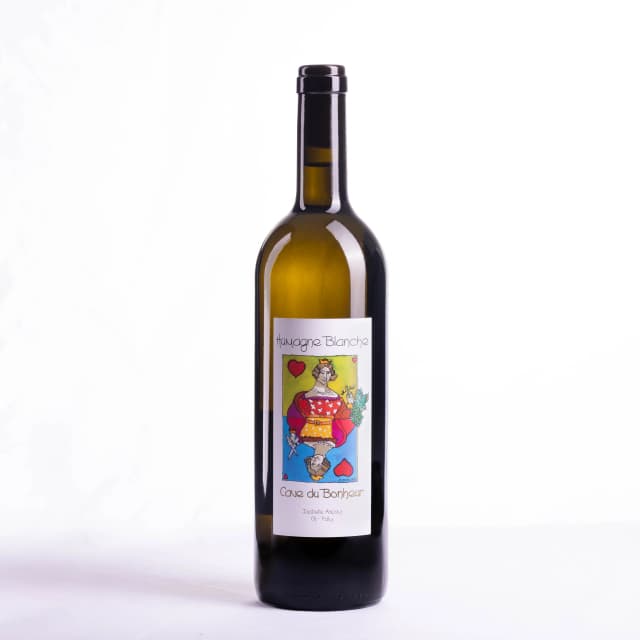
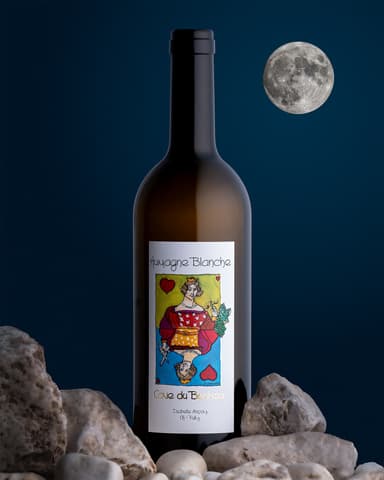
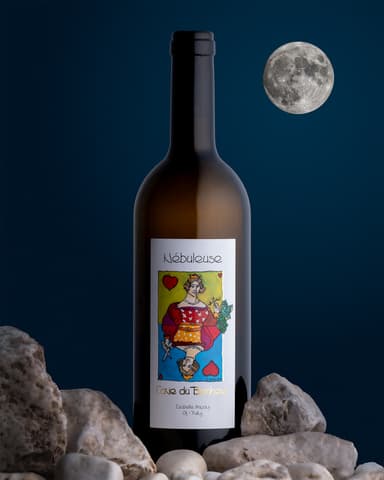
Humagne Blanche is an extremely rare indigenous Valaisian grape variety. Cave du Bonheur is among the few producers still cultivating it. A few hundred bottles are produced each year under the name Cuvée La Nébuleuse, on the granitic slopes of Fully.
The wine of new mothers
Since at least 1528, Humagne Blanc has held a singular place in Valaisian folk medicine. It was known as the «vin des accouchées» — the wine of new mothers: until the mid-20th century, it was given warm to women who had just given birth, mixed with cinnamon, nutmeg, cloves, honey, hyssop and mugwort — sometimes as a panade. It was believed to soothe pain, strengthen the body, «cleanse the womb» and «restore the blood».
The belief underpinning this tradition? That Humagne Blanc contained three times more iron than other grapes. Modern chemical analyses have refuted this myth: its iron content is no higher than that of other grape varieties. Yet the power of the tradition endures.
Related in name, strangers in blood
Despite sharing a name, Humagne Blanc and Humagne Rouge share no genetic kinship. DNA analyses carried out at Changins (Switzerland) and in the Aosta Valley (Italy) have confirmed this unequivocally: their lineages are entirely distinct. Humagne Blanc is related to southern French varieties (Colombaud de Provence, Chichaud from the Ardèche), while Humagne Rouge is genetically identical to Cornalin d'Aoste — a natural cross between Mayolet and Petit Rouge from the Aosta Valley. The name «Humagne Rouge» is believed to have appeared around 1900, most likely to capitalise on the reputation of a grape documented since 1313.
Tasting notes
La Nébuleuse is distinguished by a rare floral intensity, elegant herbal notes and a long, persistent finish. On the nose, white flowers and fresh herbs. On the palate, an ample texture, balanced acidity and the characteristic minerality of Fully's granitic terroir.
Frequently asked questions
What is Humagne Blanche?
Humagne Blanche is one of the rarest indigenous Valaisian grape varieties. Not to be confused with Humagne Rouge (a different red grape). Cave du Bonheur is among the few producers cultivating it, with production limited to a few hundred bottles per year under the cuvée La Nébuleuse.
How many bottles of Humagne Blanche are produced?
Cave du Bonheur produces a few hundred bottles of Humagne Blanche per year under the cuvée La Nébuleuse. Production is deliberately limited to preserve the quality and authenticity of this rare grape variety.
Why is Humagne Blanc called the «wine of new mothers»?
Since at least 1528, Valaisian tradition called for Humagne Blanc to be given warm — with cinnamon, nutmeg, cloves, honey and aromatic herbs — to women who had just given birth. It was credited with soothing pain, fortifying the body and «restoring the blood». This practice continued until the mid-20th century. Modern analyses have shown that its iron content is no higher than other grape varieties — but the nickname has remained in Valaisian memory.
Are Humagne Blanc and Humagne Rouge from the same family?
No, despite their shared name. DNA analyses confirm they have no genetic link. Humagne Blanc has been documented since 1313 and is related to varieties from Provence and the Ardèche. Humagne Rouge — whose name only appeared around 1900 — is genetically identical to Cornalin d'Aoste, a cross between Mayolet and Petit Rouge from the Aosta Valley.